
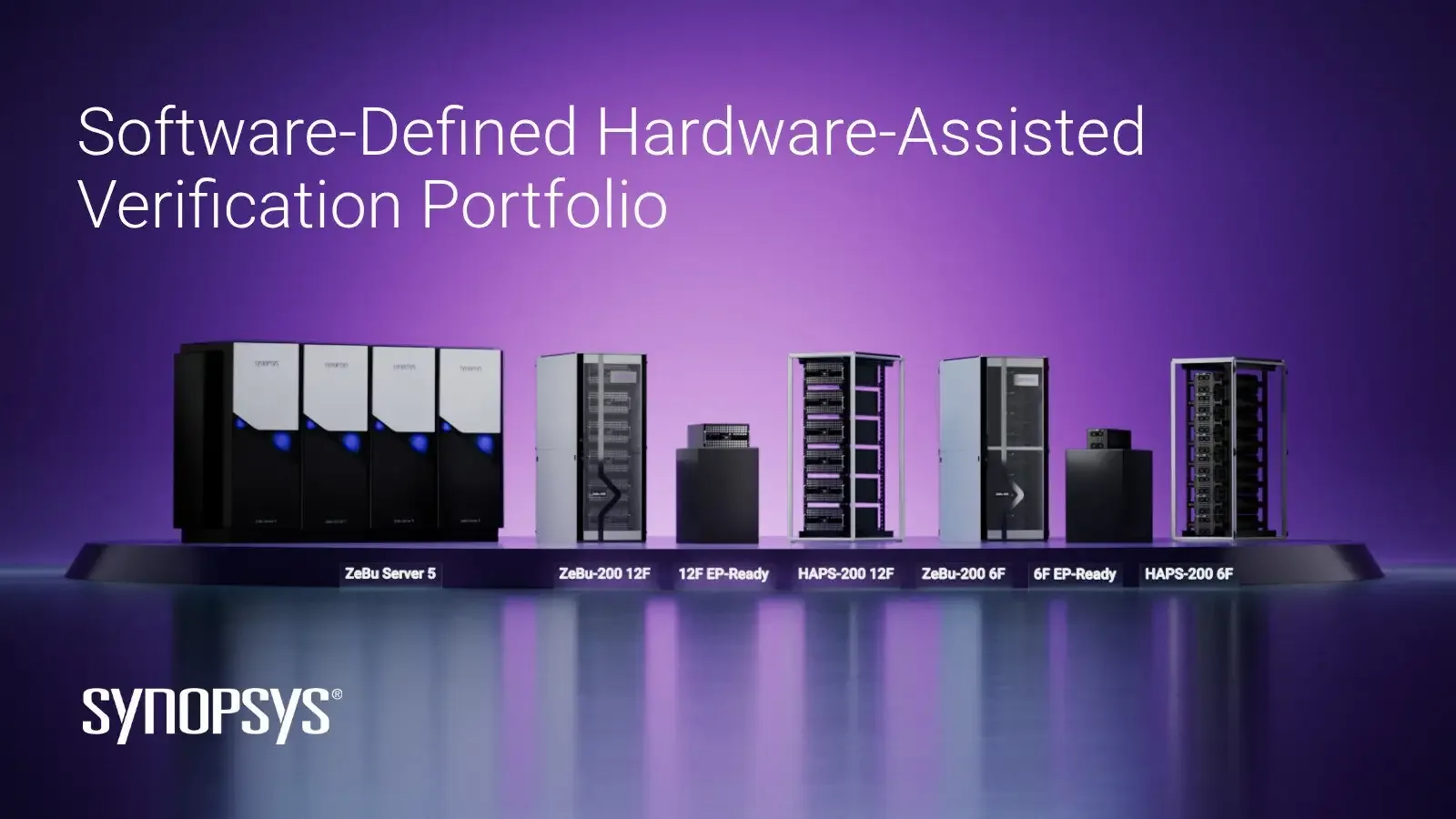
The chips powering today’s AI systems have quietly become some of the most complex objects ever engineered — and the tools used to design them are struggling to keep up. Synopsys, one of the world’s most influential chip design software companies, just took a significant step to close that gap. Fresh off its $35 billion acquisition of engineering simulation giant Ansys, the company has unveiled a new suite of AI chip design tools that aims to fundamentally change how engineers build the next generation of AI hardware.
This isn’t a story about a software update. It’s a signal that the physical limits of AI chip manufacturing are becoming one of the most consequential bottlenecks in the entire AI industry.
The Hidden Complexity Inside Modern AI Chips
Most people picture a computer chip as a flat piece of silicon — a single, unified slab etched with microscopic circuits. That image is now decades out of date. The chips powering AI models from companies like NVIDIA and AMD are increasingly built from smaller, modular components called chiplets — specialized units that are stacked on top of each other and connected in intricate three-dimensional arrangements.
Think of it like going from building a single-story house to engineering a skyscraper. The structural, thermal, and mechanical challenges multiply at every level. Heat has to go somewhere. Physical stress accumulates at connection points. Tiny manufacturing variations can cascade into expensive failures — often discovered far too late in the process.
Why the Old Design Workflow Was Broken
For years, chip designers have relied on a patchwork of disconnected software tools — one for circuit layout, another for thermal simulation, another for structural stress analysis. Each stage of design lived in its own silo. Engineers would finish one phase, hand off their work, and only discover problems once they reached the next stage.
Synopsys CEO Sassine Ghazi put it plainly: “Typically you have engineers designing for each step in a siloed way. What ends up happening is that the product is more expensive and it’s not operating at its maximum potential.” That’s not just an engineering inefficiency — it’s a direct cost to AI companies racing to build better hardware faster.
The new toolset aims to collapse those silos. By embedding simulation capabilities directly into the core design workflow, engineers can now identify problems like heat-induced warping or structural stress while they’re designing — not after the fact, when fixes cost orders of magnitude more to implement.
What the Ansys Acquisition Was Really About
When Synopsys announced its $35 billion purchase of Ansys in 2023, many observers framed it as a consolidation play — two large software companies joining forces. The real strategic logic runs deeper than that.
Ansys is a world leader in physics-based simulation software. Its tools are used across aerospace, automotive, and industrial engineering to model how physical objects behave under real-world conditions — heat, pressure, vibration, fluid dynamics. By absorbing that expertise into its chip design platform, Synopsys is essentially bringing the physical world into the digital design process.
This matters enormously for chiplet-based AI chips, where the physical behavior of stacked components is just as critical as the logic of the circuits themselves. You can design a perfect circuit on a computer screen and still end up with a chip that warps, overheats, or degrades under operational stress. That’s the problem this acquisition was built to solve.
The Broader Trend: AI Hardware Is Its Own Arms Race
It’s easy to focus on AI software — the models, the applications, the interfaces. But underneath all of it is a hardware race that is just as fierce and arguably more constrained. Training large AI models requires enormous amounts of specialized compute. Building that compute requires chips that push the boundaries of physics. And designing those chips requires tools that didn’t fully exist five years ago.
What Synopsys is doing fits into a broader pattern: the entire AI supply chain is being rebuilt from the ground up. From chip architecture to chip design software to packaging technology to power infrastructure — every layer is being reinvented simultaneously. The companies that build the tools for chip designers sit at a surprisingly powerful position in this ecosystem, largely invisible to the public but essential to everything above them.
Key Facts: Synopsys AI Chip Design Expansion
| Detail | Information |
|---|---|
| Ansys Acquisition Value | $35 billion (completed 2024) |
| Core Problem Being Solved | Siloed chip design workflows causing delays and higher costs |
| Key Technology Challenge | Chiplet stacking — heat, physical stress, reliability at scale |
| New Capability Introduced | Physics simulation embedded directly into design workflow |
| Primary Beneficiaries | AI chip designers at firms like NVIDIA, AMD, and hyperscale cloud companies |
| Expected Outcome | Faster design cycles, lower chip cost, better performance-per-watt |
| Announced At | Silicon Valley industry event, 2025 |
What This Means for AI Performance and Cost
Here’s the practical implication that often gets lost in technical coverage: better chip design tools directly affect what AI costs to run. When chips are designed more efficiently — with fewer late-stage redesigns, better thermal management, and optimized power consumption — the result is AI infrastructure that costs less to build and less to operate.
For enterprises adopting AI at scale, that matters enormously. Cloud computing costs are already one of the biggest barriers to widespread AI adoption. Anything that reduces the cost of the underlying hardware, even incrementally, has compounding effects across the entire AI industry. A ten percent improvement in power efficiency at the chip level doesn’t stay a ten percent improvement — it multiplies across millions of chips running continuously in data centers around the world.
What the Next 12–24 Months Are Likely to Look Like
Synopsys is not moving alone. The chip design software space — sometimes called EDA, for Electronic Design Automation — is entering its most competitive and consequential period in decades. Rivals like Cadence Design Systems are making their own aggressive moves into AI-assisted design tools. Meanwhile, NVIDIA, Apple, and major cloud providers are all investing heavily in custom silicon, which means demand for sophisticated design tools is growing rapidly.
Over the next two years, I expect to see simulation and physical modeling become standard expectations in chip design workflows — not optional add-ons. The chiplet era is forcing the industry’s hand. You simply cannot design a 3D-stacked AI accelerator with 2015-era tools and expect it to survive contact with real-world operating conditions.
The companies that successfully unify digital design with physical simulation will hold enormous leverage over the pace of AI hardware development — and by extension, over how quickly AI capabilities themselves advance. That’s not a peripheral story. That’s a central one.
If you’re watching the AI industry and want to understand where the real infrastructure bets are being placed, chip design software is one of the most underrated places to look. I’ll keep tracking this space closely — and if this kind of deep-dive analysis is useful to you, explore more of our coverage on AI hardware, enterprise automation, and the physical infrastructure reshaping the AI era.