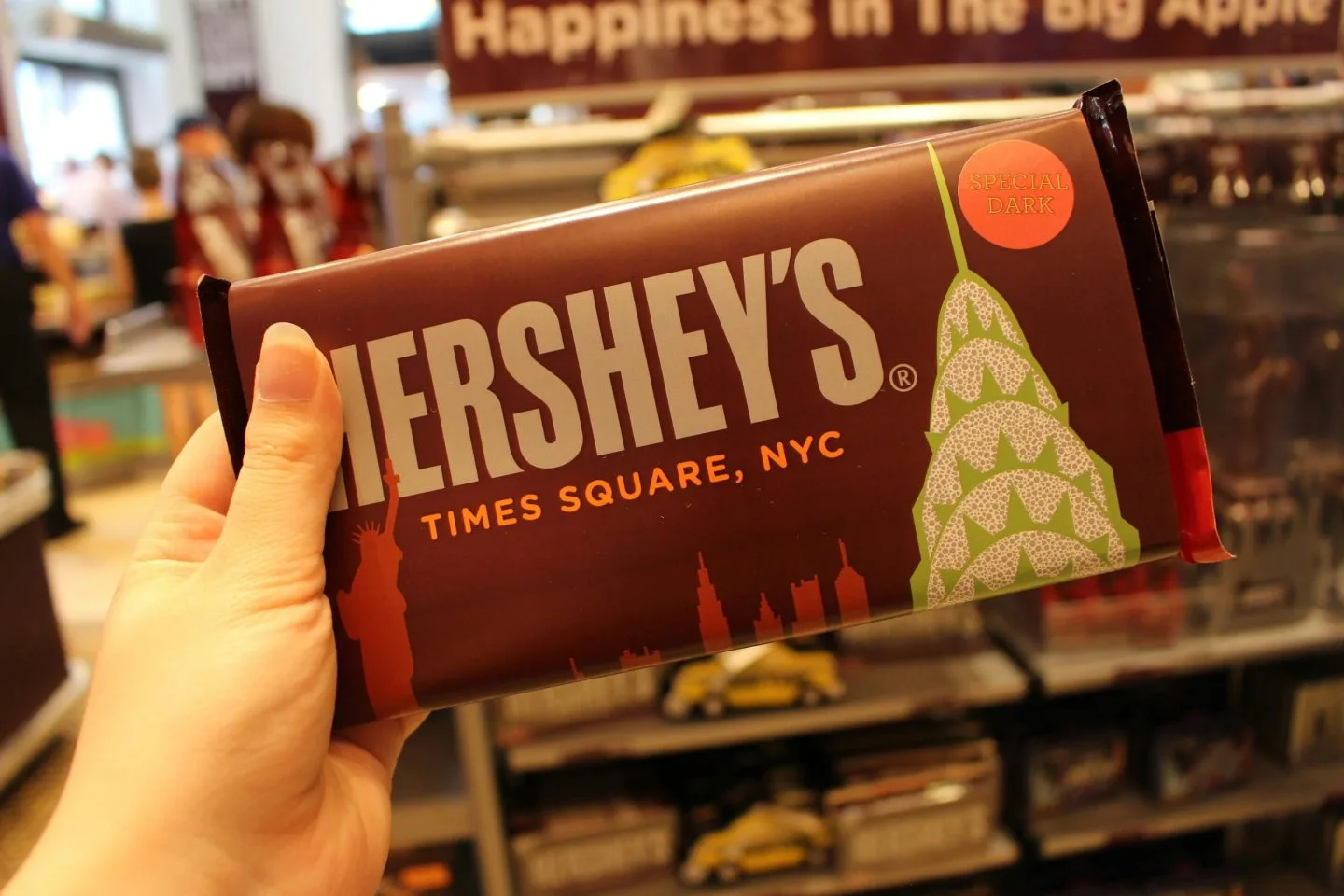
When a 130-year-old candy company publicly commits to embedding AI into every stage of its operations — from how it buys cocoa to how it ships chocolate bars to retailers — that is not a pilot program. That is a structural shift in how large manufacturers intend to run their businesses for the next decade. The Hershey Company’s Investor Day announcement is one of the clearest signals yet that enterprise AI has moved out of the boardroom and onto the factory floor.
The Real Story Behind “AI-Enabled Decision-Making”
The phrase “AI-enabled decision-making” gets used a lot in corporate strategy decks, often without much substance behind it. What makes Hershey’s plan worth examining closely is the specificity of where that phrase is being applied. The company is targeting sourcing analytics, automated fulfilment, plant operations, and worker coordination — not marketing, not customer service, not the places where AI tends to show up first.
This matters because supply chains are notoriously difficult to optimize. They involve dozens of variables moving simultaneously: commodity prices, weather patterns, seasonal demand, retailer expectations, and logistics capacity. Getting those variables to talk to each other in real time has historically required armies of analysts. AI changes that calculus significantly.
Why the Food Industry Has a Particular Urgency Here
Food and snack companies operate under a specific kind of pressure that other industries don’t face in the same way. Cocoa prices, for instance, can swing dramatically based on rainfall in West Africa. Sugar is subject to trade policy, drought cycles, and shifting global demand. A company like Hershey has to lock in ingredient purchasing decisions months in advance, often without knowing exactly what the market will look like when those ingredients arrive.
Traditional forecasting tools help, but they are largely backward-looking — they tell you what happened, not what is likely to happen next under a range of conditions. AI-driven sourcing analytics can model multiple scenarios simultaneously and flag risks before they become shortages or cost overruns. For a company spending hundreds of millions annually on raw ingredients, even a modest improvement in purchasing decisions is financially significant.
From Isolated Pilots to System-Wide Integration
One of the most telling details in Hershey’s announcement is the ambition to connect different parts of the business through digital planning tools. This reflects a broader maturation happening across enterprise AI right now. Companies spent most of 2022 and 2023 running contained experiments — AI in one department, a chatbot here, a predictive model there. What is emerging now is the next phase: integration.
Think of it like upgrading from individual smart home devices to a fully connected home system. A smart thermostat is useful on its own. But when it communicates with your schedule, the weather forecast, and your energy costs, it becomes genuinely intelligent. Hershey is essentially trying to build that kind of connected intelligence across its supply chain — where sourcing data informs production planning, which informs fulfilment, which informs delivery timing to retailers.
Plant Automation Is Only Part of the Picture
Increasing factory automation is not new for manufacturers. Robotic arms and conveyor systems have been part of food production for decades. What is changing is the layer of intelligence sitting above that physical infrastructure. Hershey’s plan positions AI not as a separate analytical tool but as something embedded in the actual workflow — guiding when machines run, adjusting production sequences, and flagging inefficiencies in near real time.
The mention of “worker connectivity” in Hershey’s strategy is also worth pausing on. This signals that the company is not pursuing a pure automation playbook where machines replace people. Instead, the model appears to be one where workers are better informed — able to act on AI-generated insights at the moment decisions need to be made on the floor. That is a more nuanced and, frankly, more realistic vision of how AI lands in physical operations.
Key Elements of Hershey’s AI Supply Chain Strategy
| Area of Application | What AI Does Here | Business Benefit |
|---|---|---|
| Sourcing Analytics | Analyzes supplier data, commodity trends, and risk factors | Better raw material purchasing decisions |
| Automated Fulfilment | Manages custom assortments and optimizes distribution speed | Faster time to market, lower error rates |
| Plant Automation | Guides production scheduling and machine efficiency | Reduced waste, improved throughput |
| Digital Planning Tools | Connects inventory, demand, and logistics data | Higher service levels, less overstock |
| Worker Connectivity | Delivers real-time operational insights to floor staff | Faster human decisions with better information |
What This Signals for Other Consumer Goods Companies
Hershey is not operating in a vacuum. Companies like Unilever, Nestlé, and Mondelez are facing the same cost pressures and supply chain complexity. What Hershey’s public commitment does is raise the competitive baseline. If one major food manufacturer is able to reduce ingredient waste, respond faster to demand shifts, and cut fulfilment errors through AI-integrated operations, its competitors will need to follow — or accept a structural disadvantage in cost and responsiveness.
This is the quiet competitive logic driving enterprise AI adoption right now. It is not about being first. It is about not being left behind when the operational gap becomes visible in margin reports and retailer relationships.
The Next 12 to 24 Months: What to Watch
Over the next two years, I expect we will see the results of this kind of system-level AI deployment start to show up in earnings calls — not as technology announcements, but as improved gross margins, lower supply chain disruption costs, and better fill rates with major retail partners. The companies that invested in integration-first AI strategies in 2025 and 2026 will start reporting measurable operational advantages by 2027.
The more interesting question is what happens when AI-optimized supply chains encounter genuinely unpredictable disruptions — geopolitical shocks, climate events, sudden demand collapses. That stress test has not happened yet at scale. When it does, we will learn a great deal about how resilient these systems actually are, and whether the investment was in genuine intelligence or sophisticated pattern-matching.
Why This Case Study Deserves Your Attention
If you follow AI primarily through the lens of language models and chatbots, the Hershey story might seem distant from the AI you read about every day. But this is where the economic weight of AI actually lives — in physical operations, commodity markets, and logistics networks that collectively represent trillions of dollars in annual activity. Understanding how AI is reshaping those systems is essential context for anyone trying to make sense of where this technology is actually going. I will be watching Hershey’s next few earnings reports closely, and if you care about the real-world impact of AI on business, you should be too.